The online grocery shopping growth in India has changed the way families purchase everyday essentials. From vegetables and fruits to packaged food and household products, consumers now prefer the convenience of ordering groceries from their smartphones instead of visiting physical stores. This rapid expansion of e-commerce groceries reflects how technology and changing lifestyles are reshaping daily routines. As customer expectations continue to evolve, modern buying habits are becoming more focused on speed, convenience, and digital access.
A few years ago, grocery shopping was mainly a weekly activity done through local markets, supermarkets, or neighborhood kirana stores. Today, the strong online grocery shopping growth shows that many households are shifting toward app-based purchasing for regular needs. Busy work schedules, home delivery convenience, and multiple payment options have made e-commerce groceries an important part of urban and semi-urban life. This change is not only affecting consumers but also transforming the entire retail supply chain.
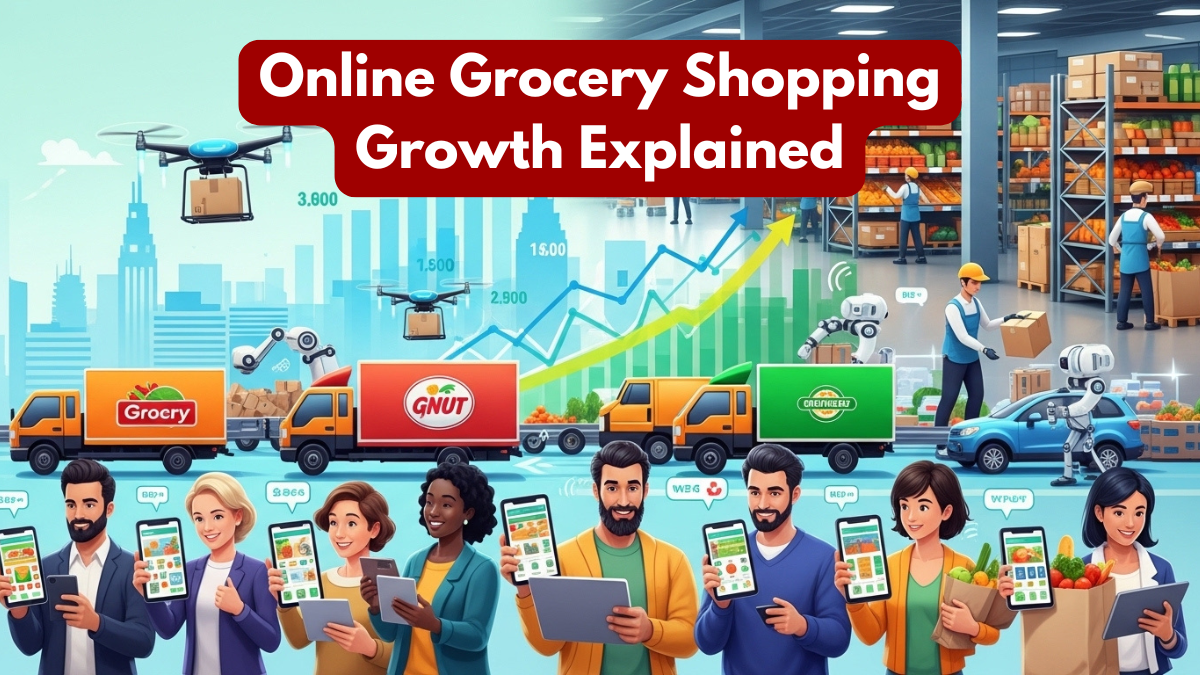
Why Online Grocery Shopping Growth Is Increasing Rapidly
The main reason behind the online grocery shopping growth is convenience. Consumers can compare prices, browse multiple brands, and place orders at any time without leaving home. This saves both time and effort, especially for working professionals, senior citizens, and families managing busy daily schedules. As a result, e-commerce groceries have become a practical solution for regular household shopping.
Another major factor is the improvement in delivery services and digital payment options. Same-day delivery, scheduled delivery slots, and quick customer support have increased trust in online platforms. These services are changing traditional buying habits, where people once preferred physically checking products before purchasing. Now, customer reviews, return policies, and easy app navigation are helping strengthen confidence in the online grocery shopping growth trend.
How Buying Habits Are Changing Through E-Commerce Groceries
Modern buying habits are becoming more flexible and technology-driven because of the expansion of e-commerce groceries. Instead of making one large monthly grocery purchase, many consumers now place smaller and more frequent orders based on immediate needs.
Some major changes include:
- More frequent grocery ordering through mobile apps
- Higher preference for doorstep delivery over store visits
- Increased comparison of product prices and offers
- Greater demand for organic and premium grocery options
- Stronger use of digital wallets and UPI for payments
- Reduced dependence on traditional supermarket shopping
These patterns clearly show how the online grocery shopping growth is influencing consumer decision-making. Shopping is becoming faster, more personalized, and less dependent on physical store visits.
Comparison Between Traditional Grocery Shopping and Online Grocery Shopping
The difference between traditional shopping and digital grocery purchasing explains why the online grocery shopping growth is becoming stronger across India.
| Aspect | Traditional Grocery Shopping | Online Grocery Shopping |
|---|---|---|
| Shopping Method | Physical store visit | App or website-based ordering |
| Time Required | Higher | Lower |
| Product Comparison | Limited by store stock | Easy across multiple brands |
| Delivery | Self-carry | Home delivery |
| Payment Options | Mostly cash/card | UPI, wallets, cards, COD |
| Convenience | Depends on travel | Available anytime |
This table highlights how e-commerce groceries offer flexibility and efficiency that support changing buying habits. These advantages are driving long-term consumer preference for digital grocery platforms.
Impact on Local Retail and Supply Chains
The rise of online grocery shopping growth has created major changes for local stores and retail supply chains. Many traditional kirana shops are adapting by offering home delivery and joining digital platforms to remain competitive. Instead of seeing e-commerce groceries only as competition, many small retailers are using them as an opportunity to expand customer reach.
Warehousing and inventory management have also become more advanced. Faster delivery expectations require stronger supply chain planning, better stock control, and local fulfillment centers. These improvements directly affect modern buying habits, where customers expect accurate product availability and quick service.
At the same time, local stores still maintain strong customer trust, especially for fresh produce and urgent purchases. This means the future of grocery shopping may involve a mix of both physical and digital retail models rather than complete replacement.
Challenges in Online Grocery Shopping Growth
Despite the success of online grocery shopping growth, there are still challenges that affect customer satisfaction and business operations. Delivery delays, wrong product substitutions, and freshness concerns can reduce trust, especially for fruits, vegetables, and dairy products.
Some consumers still prefer physical shopping because they want to personally inspect product quality before buying. This remains a challenge for e-commerce groceries, particularly in smaller cities where digital trust may be lower. In addition, delivery charges and minimum order requirements can influence buying habits and reduce repeat purchases.
Technology access is another issue. While urban users adapt quickly, rural areas may face internet limitations or lower app familiarity. For long-term success, the online grocery shopping growth model must remain simple, affordable, and reliable for all users.
Conclusion
The online grocery shopping growth trend reflects how modern lifestyles are changing everyday consumer behavior across India. Stronger e-commerce groceries platforms have made shopping more convenient, flexible, and time-saving for millions of households. At the same time, evolving buying habits show that customers now expect faster service, better pricing, and easier digital experiences.
Although challenges like delivery quality and customer trust still exist, the long-term future of online grocery shopping remains strong. As technology improves and more consumers adopt digital retail, the grocery market will continue to evolve toward a smarter and more connected shopping experience.
FAQs
What does online grocery shopping growth mean?
Online grocery shopping growth refers to the increasing number of consumers purchasing groceries through mobile apps and websites instead of visiting physical stores.
Why are e-commerce groceries becoming popular?
E-commerce groceries are becoming popular because they offer convenience, doorstep delivery, better price comparison, flexible payment options, and time-saving shopping experiences.
How are buying habits changing because of online grocery shopping?
Modern buying habits are shifting toward smaller, more frequent orders, stronger use of digital payments, and greater preference for app-based grocery shopping over traditional store visits.
Are local grocery stores affected by online grocery shopping growth?
Yes, local stores are adapting by offering delivery services and joining digital platforms to stay competitive while maintaining customer trust for fresh and urgent purchases.
Click here to learn more