Poetry has been one of the most expressive forms of literature for centuries, allowing writers to communicate emotions, ideas, and experiences through rhythm, imagery, and carefully chosen words. Understanding the types of poetry forms explained helps readers appreciate the artistic beauty of poems while helping writers improve their creative expression. Poetry exists in many structures and styles, each offering unique ways to present thoughts and emotions. Different poetry styles use rhythm, rhyme, symbolism, and structure to create distinct reading experiences.
Modern poetry continues evolving across books, music, digital media, and spoken-word performances. From traditional sonnets to modern free verse, the variety of writing forms available in poetry gives writers limitless creative possibilities. Learning about the major types of poetry forms explained allows both beginners and experienced writers to better understand poetic techniques, emotional storytelling, and literary creativity. Poetry remains important because it captures human experiences in emotionally powerful and memorable ways.
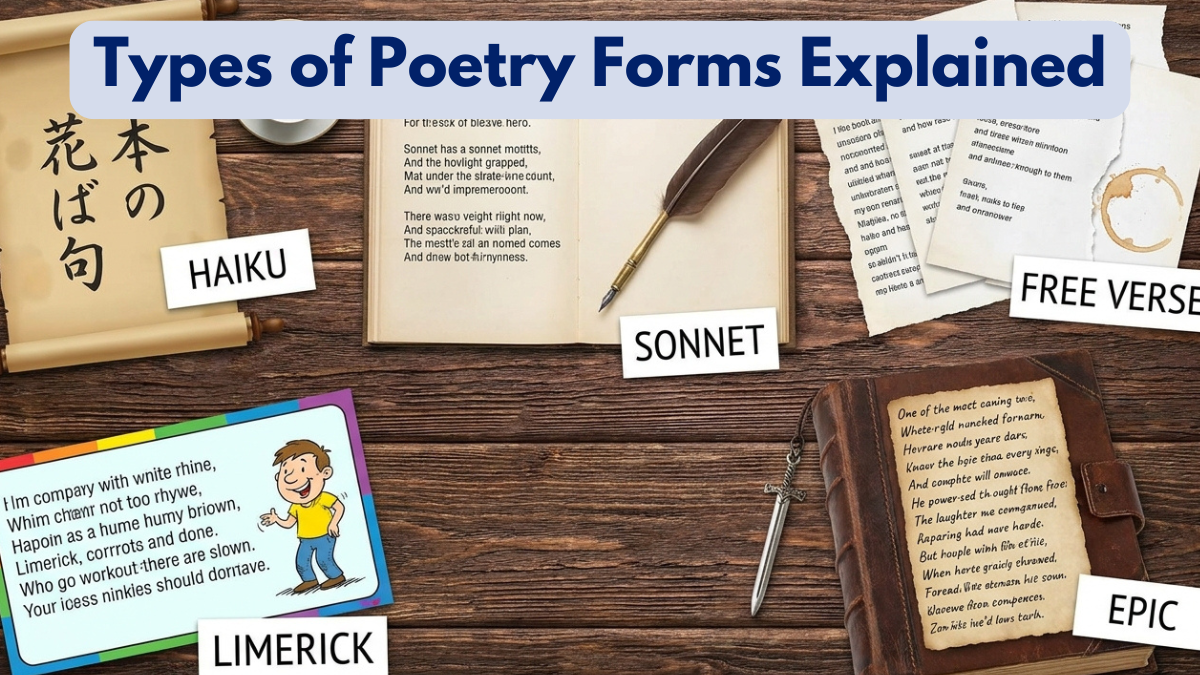
Understanding Poetry and Its Importance
Poetry is a literary art form that uses rhythm, imagery, figurative language, and structure to express thoughts and emotions creatively. Unlike standard prose, poetry often focuses on emotional intensity, symbolism, and musical language patterns. Different poetry styles create different emotional effects depending on their structure and tone.
Poetry is important because it helps:
- Express emotions creatively
- Preserve culture and traditions
- Improve language skills
- Encourage imagination
- Explore human experiences deeply
The study of types of poetry forms explained helps readers recognize how poetic structures influence meaning and emotional impact. Some poems rely heavily on rhyme and rhythm, while others focus on free-flowing emotional expression.
Modern poets often experiment with multiple writing forms to create unique artistic voices. This flexibility allows poetry to remain relevant across different cultures, generations, and creative movements.
Common Types of Poetry Forms
There are many classic and modern types of poetry forms explained in literature. Each form follows different structural rules and stylistic approaches.
| Poetry Form | Main Characteristics | Common Theme |
|---|---|---|
| Sonnet | 14 lines with rhyme scheme | Love and reflection |
| Haiku | 3 lines with syllable pattern | Nature and simplicity |
| Free Verse | No strict rhyme or rhythm | Personal expression |
| Limerick | Humorous five-line poem | Comedy and entertainment |
| Ballad | Narrative storytelling poem | Adventure and emotion |
| Ode | Formal praise poem | Admiration and celebration |
Among all poetry styles, the sonnet remains one of the most respected traditional forms. Sonnets often explore themes of love, beauty, and mortality using structured rhyme schemes and emotional language.
Free verse has become one of the most popular modern writing forms because it allows poets greater creative freedom. Unlike traditional poetry, free verse does not follow strict rhyme or meter rules.
Understanding different types of poetry forms explained helps writers choose structures that best match their themes and emotions.
Traditional Poetry Styles and Their Features
Traditional poetry often follows strict patterns related to rhyme, rhythm, and syllable count. These structured poetry styles require careful attention to language and musicality.
Some common features of traditional poetry include:
- Rhyming patterns
- Repeated rhythm
- Fixed line counts
- Structured stanzas
- Formal language techniques
For example, haiku poetry follows a specific syllable structure and typically focuses on nature or seasonal imagery. Ballads tell emotional stories through rhythmic narrative verses.
These traditional writing forms have influenced literature for centuries and continue inspiring modern poets. Even contemporary poetry often includes elements borrowed from classic structures.
Many literary schools teach classic types of poetry forms explained because they help writers develop discipline, rhythm awareness, and stronger language control.
Modern Poetry and Creative Expression
Modern poetry has expanded beyond strict traditional rules, allowing poets to experiment with language, structure, and visual presentation. Contemporary poetry styles often focus on emotional honesty, personal identity, and social commentary.
Modern poetry frequently includes:
- Free verse structures
- Spoken word performances
- Visual poetry
- Experimental formatting
- Conversational language
Free verse is one of the most influential modern writing forms because it gives poets complete flexibility in pacing and expression. Instead of following strict rhyme schemes, free verse focuses on emotional rhythm and imagery.
Understanding types of poetry forms explained also means recognizing how poetry evolves with culture and society. Modern poets use poetry to discuss mental health, politics, relationships, technology, and identity in innovative ways.
Digital media platforms have also transformed how poetry is shared and consumed. Social media and spoken-word communities have introduced poetry to younger audiences while encouraging new creative experimentation.
How Poetry Forms Affect Emotional Impact
Different poetry styles create different emotional experiences for readers. Structured forms often feel musical and controlled, while free-flowing poetry may feel intimate and spontaneous.
The emotional impact of poetry depends on:
- Rhythm and pacing
- Word choice
- Imagery and symbolism
- Sound patterns
- Structural format
For example, a slow rhythmic poem may create feelings of sadness or reflection, while short energetic lines can create urgency or excitement. The structure itself becomes part of the storytelling experience.
In many writing forms, poets carefully choose line breaks and stanza divisions to influence how readers process emotions and ideas. These techniques make poetry highly expressive despite often using very few words.
Studying types of poetry forms explained helps writers understand how structure affects mood, tone, and audience interpretation.
Differences Between Major Poetry Forms
Different poetry forms vary significantly in style, purpose, and emotional effect. Comparing forms helps writers understand which structures best fit their creative goals.
| Poetry Form | Structure | Emotional Effect |
|---|---|---|
| Sonnet | Formal and rhythmic | Romantic and reflective |
| Haiku | Short and minimal | Calm and thoughtful |
| Free Verse | Flexible and open | Personal and emotional |
| Ballad | Narrative structure | Dramatic and engaging |
| Limerick | Rhyming and playful | Humorous and lighthearted |
These comparisons show how different poetry styles shape reader experiences. Some forms focus heavily on storytelling, while others prioritize emotional imagery or philosophical reflection.
Modern writers often blend multiple writing forms together to create innovative poetic styles. This experimentation keeps poetry dynamic and creatively diverse.
The Role of Poetry in Literature and Culture
Poetry has always played a major role in preserving cultural identity, emotional history, and artistic expression. Across civilizations, poems have been used to tell stories, celebrate traditions, express political ideas, and communicate personal emotions.
Important functions of poetry include:
- Recording historical experiences
- Preserving language traditions
- Encouraging artistic creativity
- Exploring emotional depth
- Inspiring social change
Understanding types of poetry forms explained allows readers to appreciate how different cultures developed unique poetic traditions over time.
Modern education also emphasizes poetry because it strengthens imagination, vocabulary, critical thinking, and emotional awareness. Different poetry styles continue influencing music lyrics, storytelling, and modern creative writing.
As literature evolves, poetry remains one of the most flexible and emotionally powerful writing forms in artistic expression.
Conclusion
Learning about the types of poetry forms explained helps readers and writers better appreciate the beauty, creativity, and emotional depth of poetic expression. From traditional sonnets and haikus to modern free verse and spoken-word poetry, different poetry styles offer unique ways to communicate thoughts, emotions, and experiences.
The wide variety of writing forms available in poetry allows endless creative possibilities for artistic storytelling and emotional connection. As poetry continues evolving through modern culture and digital platforms, its importance in literature and human expression remains stronger than ever.
FAQs
What are the main types of poetry forms?
The main poetry forms include sonnets, haikus, free verse, ballads, limericks, and odes.
Why are poetry styles important?
Different poetry styles create different emotional effects, rhythms, and storytelling experiences for readers.
What is free verse poetry?
Free verse is a modern poetic form that does not follow strict rhyme or rhythm patterns.
How do writing forms affect poetry?
Different writing forms influence structure, pacing, emotional tone, and the overall reading experience.
Why should writers learn poetry forms?
Learning various types of poetry forms explained helps writers improve creativity, language skills, and emotional expression.
Click here to learn more