Modern emergencies require rapid decision-making, coordinated communication, and real-time information management. Understanding emergency response command centers reveals how governments, military agencies, police departments, and disaster management teams coordinate responses during major crises. These command centers act as centralized operational hubs where emergency personnel monitor incidents, analyze incoming data, communicate with field teams, and direct response operations. From natural disasters and industrial accidents to terrorist attacks and public health emergencies, command centers play a critical role in protecting lives and infrastructure.
Today’s crisis management systems rely heavily on digital communication networks, artificial intelligence, surveillance technology, satellite monitoring, and integrated emergency coordination platforms. Advanced disaster control infrastructure allows emergency teams to manage large-scale incidents more efficiently than ever before. Exploring emergency response command centers helps explain how modern emergency operations depend on coordination, technology, and strategic planning to reduce damage and improve public safety during critical situations.
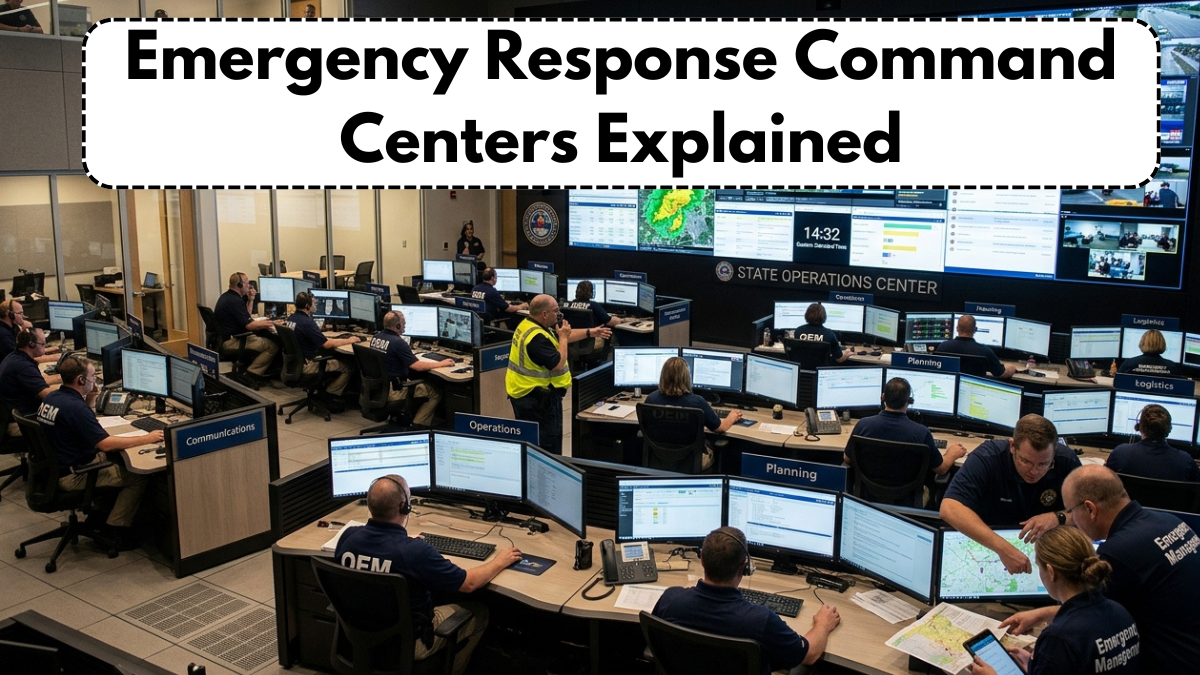
The Purpose of Emergency Response Command Centers
The primary objective behind emergency response command centers is coordinating emergency operations from a centralized location. During crises, multiple agencies must work together quickly and efficiently to control dangerous situations.
Modern command centers are commonly responsible for:
- Emergency communication coordination
- Resource deployment management
- Situation monitoring
- Public safety information distribution
- Interagency coordination
- Strategic decision-making
One major advantage of modern crisis management systems is the ability to collect and analyze real-time information from multiple sources simultaneously. This helps decision-makers respond more effectively during fast-moving emergencies.
Advanced disaster control operations often involve police departments, firefighters, medical teams, transportation agencies, military units, and utility companies working together through centralized command infrastructure.
Understanding emergency response command centers also involves recognizing the importance of rapid information sharing. Delays in communication during emergencies can increase confusion, injuries, and operational failures.
Modern command centers therefore rely heavily on high-speed communication systems and integrated digital platforms.
Main Components of Crisis Management Systems
Modern command centers combine communication technology, surveillance systems, mapping tools, and operational coordination platforms into highly integrated emergency management environments.
The following table highlights major command center components and their functions:
| Command Center Component | Main Purpose | Operational Benefit |
|---|---|---|
| Communication Networks | Emergency coordination | Real-time information sharing |
| Surveillance Systems | Incident monitoring | Situational awareness |
| GIS Mapping Platforms | Location tracking | Resource deployment planning |
| Emergency Alert Systems | Public communication | Rapid warning distribution |
| Data Analysis Software | Threat assessment | Faster decision-making |
| Backup Power Infrastructure | Operational continuity | Reliability during outages |
One important aspect of emergency response command centers is communication reliability. During disasters, command centers must maintain continuous contact with field teams and emergency agencies.
Modern crisis management systems often include satellite communication systems and redundant backup networks to ensure operations continue even if local infrastructure fails.
Another major component of disaster control infrastructure is geographic information systems (GIS). These mapping tools help emergency managers track incidents, monitor evacuation zones, and coordinate response resources.
Advanced command centers may also include large digital display walls showing live surveillance footage, weather radar, traffic conditions, and emergency response activity in real time.
How Emergency Response Operations Work
Understanding emergency response command centers requires examining how emergency operations are coordinated during real incidents. Command centers function as the operational brain of disaster management systems.
Typical emergency response operations involve:
- Threat identification
- Situation assessment
- Resource allocation
- Public warning coordination
- Field communication management
- Recovery operation planning
When emergencies occur, modern crisis management systems rapidly collect information from emergency calls, surveillance systems, weather monitoring platforms, and field responders.
Decision-makers inside disaster control centers then evaluate the situation and coordinate response strategies based on available data.
One major factor in successful emergency response command centers is real-time situational awareness. Emergency personnel must understand changing conditions quickly to deploy resources effectively.
Modern command centers also coordinate evacuation planning, medical response operations, transportation management, and public communication efforts during large-scale emergencies.
Some advanced facilities use artificial intelligence systems to analyze incoming information and identify potential operational risks automatically.
Technology Used in Disaster Control Operations
Technology has dramatically improved the capabilities of modern disaster control operations. Today’s command centers rely heavily on integrated digital systems capable of managing enormous amounts of information rapidly.
Important technologies used in crisis management systems include:
- Artificial intelligence platforms
- Drone surveillance systems
- Satellite communication networks
- Real-time data analytics
- Facial recognition systems
- Smart sensor networks
Artificial intelligence is becoming increasingly important in emergency response command centers because it can analyze data faster than human operators alone.
AI systems can help predict disaster progression, identify resource shortages, and improve emergency response planning.
Modern disaster control infrastructure also increasingly uses drones for aerial monitoring during fires, floods, industrial accidents, and search-and-rescue operations.
Another important development in crisis management systems involves smart sensor networks capable of detecting environmental hazards such as toxic gas leaks, radiation, flooding, or structural instability.
As emergency management technology advances, command centers continue becoming more automated and data-driven.
Challenges Faced by Emergency Response Command Centers
Despite technological improvements, emergency operations still face significant challenges. One major issue affecting emergency response command centers is managing rapidly changing situations under extreme pressure.
Current operational challenges include:
- Communication overload
- Infrastructure damage
- Cybersecurity threats
- Resource shortages
- Public misinformation
- Multi-agency coordination difficulties
Modern crisis management systems must often operate during severe weather events, power outages, or damaged communication infrastructure.
Cybersecurity is also becoming a growing concern for modern disaster control networks because command centers rely heavily on digital communication systems and cloud-connected infrastructure.
Understanding emergency response command centers also involves recognizing the challenge of information accuracy. During emergencies, false reports and misinformation can spread rapidly and complicate response efforts.
Another challenge involves coordinating multiple agencies with different operational procedures and communication systems.
Despite these difficulties, command centers remain essential for maintaining organized emergency response operations during large-scale crises.
The Future of Crisis Management Systems
The future of emergency response command centers will likely involve greater automation, artificial intelligence integration, and predictive emergency management systems. Governments worldwide continue investing heavily in smarter emergency coordination infrastructure.
Future developments in crisis management systems may include:
- AI-powered disaster prediction
- Autonomous emergency drones
- Smart city emergency integration
- Real-time population tracking
- Advanced virtual reality training
- Predictive resource management systems
One major trend in future disaster control operations involves predictive analytics. AI systems may eventually forecast emergency escalation patterns before situations become severe.
Advanced emergency response command centers may also integrate directly with smart city infrastructure, including transportation systems, hospitals, power grids, and public communication networks.
Another important future development involves immersive virtual reality training systems that allow emergency personnel to practice complex disaster scenarios safely.
Future crisis management systems are also expected to improve personalized public alerts and evacuation guidance using mobile technology and location-based communication systems.
As disasters become more complex due to climate change, urbanization, and technological risks, emergency command centers will likely continue evolving rapidly.
Conclusion
Understanding emergency response command centers highlights the critical role centralized coordination and advanced technology play in modern emergency management. Through integrated crisis management systems, surveillance networks, AI-powered analytics, and sophisticated disaster control infrastructure, emergency agencies can respond more effectively during large-scale crises.
As technology continues advancing, command centers will likely become more intelligent, automated, and interconnected with broader public safety systems. The future of emergency management will depend heavily on real-time communication, predictive analysis, and highly coordinated response operations capable of handling increasingly complex emergencies worldwide.
FAQ
What are emergency response command centers?
Emergency response command centers are centralized facilities where emergency agencies coordinate disaster response operations and manage crisis situations.
What are crisis management systems?
Crisis management systems are technologies and operational frameworks used to coordinate emergency response, communication, and disaster management activities.
How does disaster control work during emergencies?
Modern disaster control operations involve monitoring threats, coordinating responders, managing resources, and communicating with the public during crises.
What technologies are used in emergency command centers?
Command centers use AI software, surveillance systems, GIS mapping tools, communication networks, drones, and real-time data analysis platforms.
Why are emergency response command centers important?
They improve coordination, speed up emergency decision-making, and help agencies respond more effectively during disasters and public safety incidents.
What is the future of crisis management systems?
Future crisis management systems may include predictive AI, autonomous emergency drones, smart city integration, and advanced real-time disaster analytics.
Click here to learn more