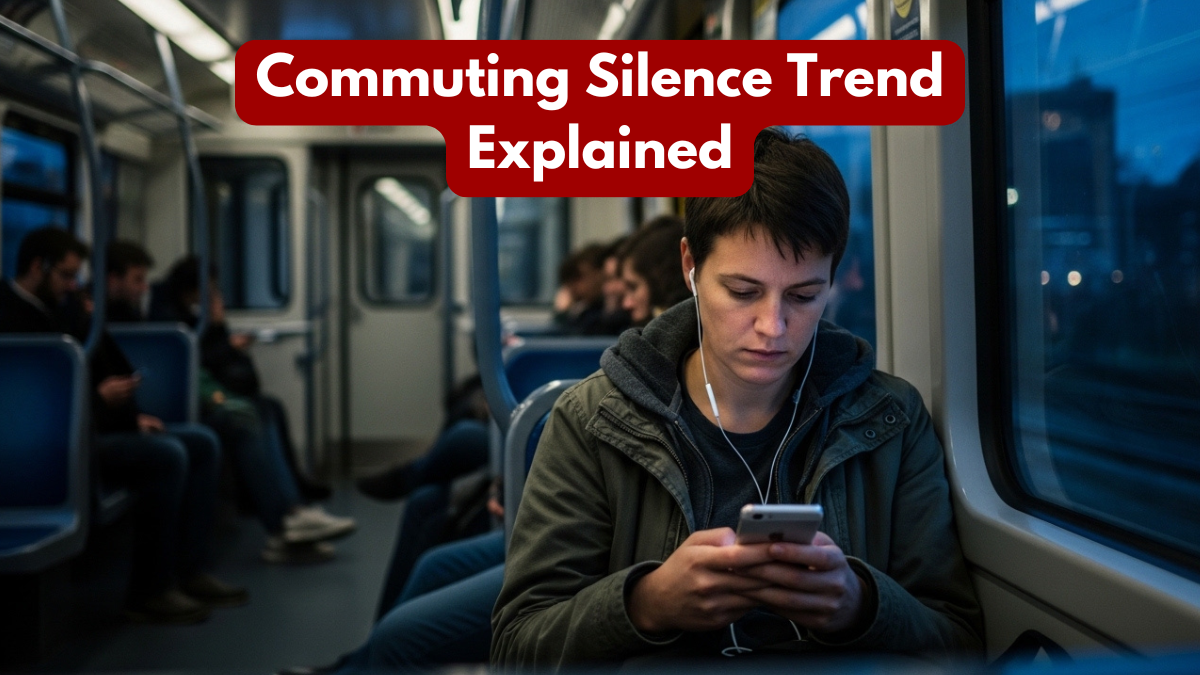
The commuting silence trend has become a noticeable part of modern travel, especially in buses, metros, trains, and office shuttles. Where daily commuting once included casual conversations, greetings, and small social interactions, many people now travel in near silence. Most passengers remain focused on their phones, wear headphones, or simply avoid eye contact throughout the journey.
This rise of the no talking commute reflects deeper changes in urban life and personal routines. Fast-paced schedules, mental fatigue, and digital distractions have changed how people experience shared travel spaces. The commuting silence trend is not always negative—it often represents privacy, personal boundaries, and emotional recovery. Understanding this shift helps explain how city travel habits are evolving in modern society.
What Commuting Silence Trend Really Means
The commuting silence trend refers to the increasing preference for quiet, private travel during daily commuting. Instead of using travel time for conversation, many people choose silence, passive entertainment, or personal reflection. This is especially common during morning and evening rush hours.
The idea of a no talking commute is not simply about avoiding people—it often reflects mental exhaustion and the need for personal space. After long work hours or crowded schedules, silence becomes a form of recovery rather than isolation.
In modern urban life, commuting is often seen as a transition period between responsibilities. People use that time to prepare mentally for work or decompress after the day ends. This makes the commuting silence trend a practical and emotional behavior rather than just a social change.
Why No Talking Commute Is Becoming Common
One major reason behind the no talking commute is digital dependency. Smartphones, music apps, podcasts, and social media fill travel time easily. People no longer rely on conversation for engagement because entertainment is always available in their hands.
Another reason is the pressure of urban life. Long work hours, traffic stress, and crowded public transport leave many commuters mentally drained. In such conditions, silence feels more comfortable than social interaction. This strengthens the commuting silence trend across cities.
Common reasons include:
- Mental fatigue after work
- Early morning low energy
- Heavy use of mobile phones
- Headphone culture during travel
- Preference for personal space
- Social anxiety in public transport
- Longer commute times in cities
- Reduced familiarity with fellow passengers
These factors make the no talking commute a normal part of modern travel behavior.
How Urban Life Changes Social Interaction During Travel
Busy urban life changes how people connect in public spaces. In smaller communities, commuting often includes familiar faces and repeated interactions. In large cities, people travel among strangers every day, reducing the natural chance for conversation.
The commuting silence trend also reflects stronger personal boundaries. Many people see silence as respectful, allowing others privacy rather than forcing conversation. This is especially true in professional environments where commuters prefer emotional distance before or after work.
However, the no talking commute can also create emotional isolation. While silence offers peace, it may reduce casual social warmth that once made public travel feel more human. The balance between privacy and connection is one of the key effects of changing urban life.
Traditional Commute vs Modern Silent Commute
| Aspect | Traditional Commute | Modern Commuting Silence Trend |
|---|---|---|
| Social Interaction | Casual conversations common | Minimal talking |
| Entertainment Source | Conversation and observation | Phones, music, podcasts |
| Emotional Purpose | Shared routine | Personal mental recovery |
| Public Comfort | Community feeling | Private personal space |
| Travel Environment | More social engagement | Quiet and disconnected |
This table shows how the commuting silence trend reflects major changes in urban life. The rise of the no talking commute has changed commuting from a social routine into a more private personal experience.
Can Silence and Social Connection Coexist?
Yes, the commuting silence trend does not mean people are becoming unfriendly—it often means they are managing energy differently. Silence can be healthy when it provides comfort, focus, and emotional balance during daily travel.
At the same time, small moments of politeness still matter. Simple greetings, offering seats, and basic courtesy help maintain social respect even within a no talking commute environment. Silence should not replace kindness.
As urban life becomes more demanding, people need both privacy and human connection. The goal is not to force conversation but to preserve respectful social interaction while allowing personal space. Understanding the commuting silence trend helps create better public transport experiences for everyone.
Conclusion
The commuting silence trend shows how modern travel behavior is changing with technology, stress, and the realities of fast-paced urban life. The rise of the no talking commute reflects a preference for privacy, emotional recovery, and digital engagement during daily travel.
While silence can provide comfort and mental rest, it also changes how people connect in shared spaces. Recognizing this balance helps people understand that commuting is no longer just movement from one place to another—it is also a personal psychological space. The commuting silence trend is a clear reflection of how modern city life shapes even the quietest daily habits.
FAQs
What is the commuting silence trend?
The commuting silence trend refers to the growing habit of traveling quietly during daily commutes, with fewer conversations and more focus on personal space, phones, or headphones.
Why is no talking commute becoming more common?
The no talking commute is increasing because people feel mentally tired, use digital devices more often, and prefer quiet time during travel in busy city environments.
How does urban life influence commuting silence?
Fast-paced urban life creates stress, longer travel times, and crowded transport systems, making silence feel more comfortable and necessary for emotional recovery.
Is commuting silence a negative social change?
Not always. The commuting silence trend can support personal peace and privacy, but too much silence may reduce small social connections that improve public travel experiences.
Can people still be polite during a no talking commute?
Yes, politeness remains important. Even during a no talking commute, small actions like offering seats, respecting space, and basic greetings maintain social respect.
Click here to learn more