The financial industry is undergoing a structural transformation as open banking ecosystems redefine how banks, fintech firms, and consumers interact. Traditionally, financial institutions operated in closed systems where customer data and services were tightly controlled. Today, open banking ecosystems enable secure data sharing through API banking frameworks, allowing third-party providers to build innovative services on top of existing banking infrastructure. This shift is accelerating fintech innovation, expanding consumer choice, and increasing competition across global financial markets. As regulations and technology converge, open banking ecosystems are becoming foundational to the future of digital finance.
Understanding Open Banking Ecosystems And API Banking
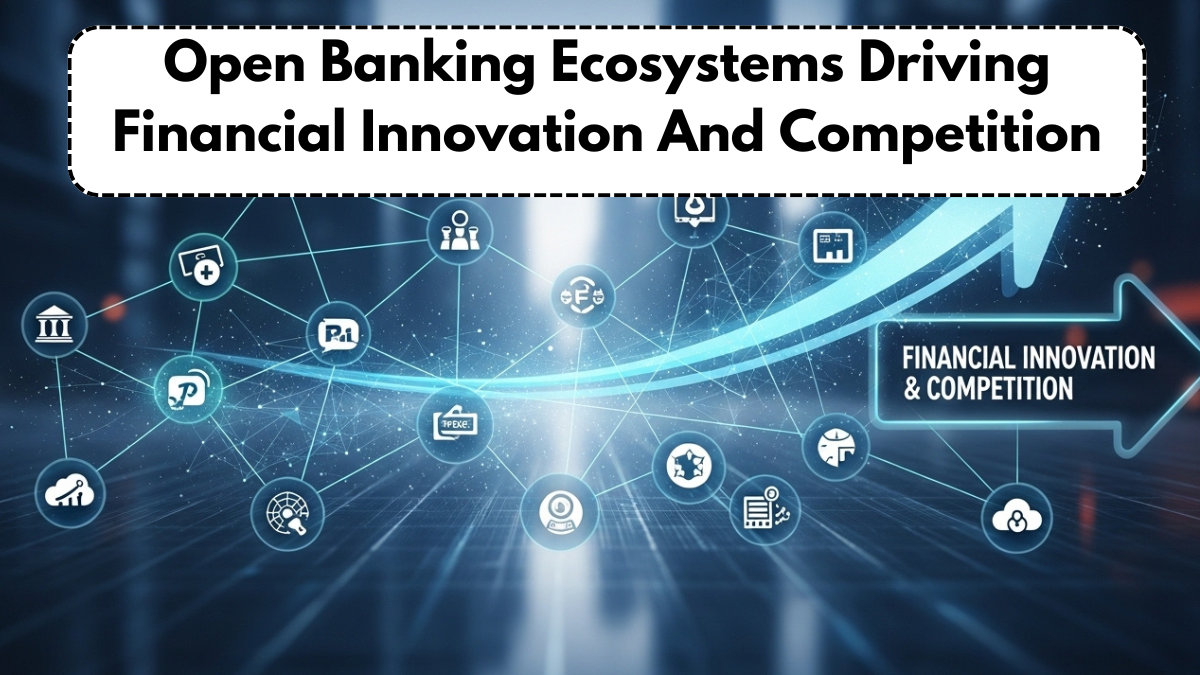
Open banking ecosystems refer to interconnected financial networks where banks share customer-permissioned data with authorized third-party providers through standardized interfaces. API banking serves as the technical backbone of these ecosystems, enabling secure and real-time data exchange between institutions and fintech platforms. By opening access to financial information and services, open banking ecosystems create opportunities for fintech innovation in payments, lending, wealth management, and financial analytics.
Core components of open banking ecosystems include:
- Secure data-sharing frameworks through API banking
- Customer consent and identity management
- Third-party fintech integration platforms
- Regulatory compliance and governance
- Real-time financial service interoperability
These components enable open banking ecosystems to function as collaborative financial platforms rather than isolated institutions.
Drivers Behind The Growth Of Open Banking Ecosystems
Several regulatory, technological, and market forces are accelerating the adoption of open banking ecosystems worldwide. Governments are introducing policies that require banks to share data securely with authorized providers, fostering fintech innovation and competition. Consumers increasingly demand personalized financial services and seamless digital experiences, which API banking enables. At the same time, fintech companies are leveraging open banking ecosystems to deliver new products without owning full banking infrastructure.
Key drivers of open banking ecosystems include:
- Regulatory mandates supporting API banking
- Consumer demand for digital financial services
- Growth of fintech innovation startups
- Competition among financial institutions
- Advances in secure data-sharing technology
These drivers demonstrate why open banking ecosystems are reshaping financial services globally.
Comparison Of Traditional Banking And Open Banking Ecosystems
Open banking ecosystems represent a major shift from closed financial systems toward collaborative platforms. The table below compares traditional banking models with API banking–enabled open banking ecosystems.
| Aspect | Traditional Banking | Open Banking Ecosystems |
|---|---|---|
| Data access | Bank-controlled | Shared via API banking |
| Innovation pace | Slow | Rapid fintech innovation |
| Service variety | Limited | Expanded ecosystem |
| Competition | Low | High |
| Customer control | Minimal | High |
| Integration | Closed systems | Interoperable |
This comparison highlights how open banking ecosystems increase fintech innovation and consumer empowerment through API banking frameworks.
Benefits Of Open Banking Ecosystems For Consumers And Industry
Open banking ecosystems deliver significant advantages for both customers and financial service providers. Consumers gain access to personalized tools, aggregated financial views, and competitive products created through fintech innovation. Financial institutions benefit from new partnerships and revenue streams enabled by API banking integration. The collaborative nature of open banking ecosystems also accelerates service development and market responsiveness.
Key benefits of open banking ecosystems include:
- Personalized financial services via fintech innovation
- Seamless account aggregation and management
- Increased competition and better pricing
- New business models through API banking
- Enhanced financial inclusion
These benefits explain why open banking ecosystems are becoming central to modern financial infrastructure.
Challenges In Implementing Open Banking Ecosystems
Despite strong momentum, open banking ecosystems face technical, regulatory, and trust-related challenges. Secure API banking integration requires robust cybersecurity and data governance frameworks. Financial institutions must also adapt legacy systems to support interoperability. Consumer trust is critical, as data sharing in open banking ecosystems depends on confidence in privacy and security protections.
Key challenges affecting open banking ecosystems include:
- Cybersecurity risks in API banking connections
- Legacy infrastructure integration
- Regulatory complexity across regions
- Consumer awareness and trust
- Standardization of open banking protocols
Addressing these challenges requires coordinated efforts among regulators, banks, and fintech providers.
Future Trends In Open Banking Ecosystems And Fintech Innovation
The future of open banking ecosystems will involve deeper financial integration, real-time data sharing, and expansion into broader financial ecosystems. API banking will enable embedded finance, allowing non-financial platforms to offer banking services. Fintech innovation will continue to produce new applications such as AI-driven financial advice, automated lending, and cross-border payment solutions.
Emerging trends shaping open banking ecosystems include:
- Embedded finance platforms using API banking
- Real-time financial data ecosystems
- AI-powered fintech innovation services
- Cross-border open banking frameworks
- Decentralized financial integration
These trends suggest open banking ecosystems will evolve into comprehensive digital finance networks connecting multiple industries.
Conclusion: Open Banking Ecosystems Transforming Financial Services
Open banking ecosystems are redefining financial services by enabling secure collaboration among banks, fintech firms, and consumers. Through API banking and accelerated fintech innovation, these ecosystems expand access, competition, and service diversity across markets. While challenges in security and standardization remain, the benefits of openness and interoperability are driving rapid adoption. As financial services continue to digitize, open banking ecosystems will become the foundation of future financial infrastructure and innovation.
FAQs
What are open banking ecosystems?
Open banking ecosystems are financial networks where banks share customer-permissioned data with third parties through API banking to enable fintech innovation.
How does API banking support open banking ecosystems?
API banking provides secure interfaces for data sharing and service integration across financial institutions and fintech platforms.
What benefits do consumers get from open banking ecosystems?
Consumers gain personalized services, account aggregation, and competitive financial products enabled by fintech innovation.
What challenges do open banking ecosystems face?
Challenges include cybersecurity, legacy integration, regulatory complexity, and consumer trust in API banking systems.
What is the future of open banking ecosystems?
The future includes embedded finance, AI-driven fintech innovation, and global API banking networks.
Click here to learn more