Home management is entering a new era with the rise of AI Housekeepers, intelligent digital systems capable of controlling, organizing, and automating everyday household tasks. Powered by advanced Smart home AI, these virtual assistants are evolving beyond simple voice commands and becoming proactive companions in daily domestic life. By 2026, AI Housekeepers will be able to anticipate human needs, manage energy consumption, coordinate chores, and even monitor home safety. This growing integration of technology promises a future where homes function more efficiently, effortlessly, and intelligently.
The Evolution of Smart Home Automation
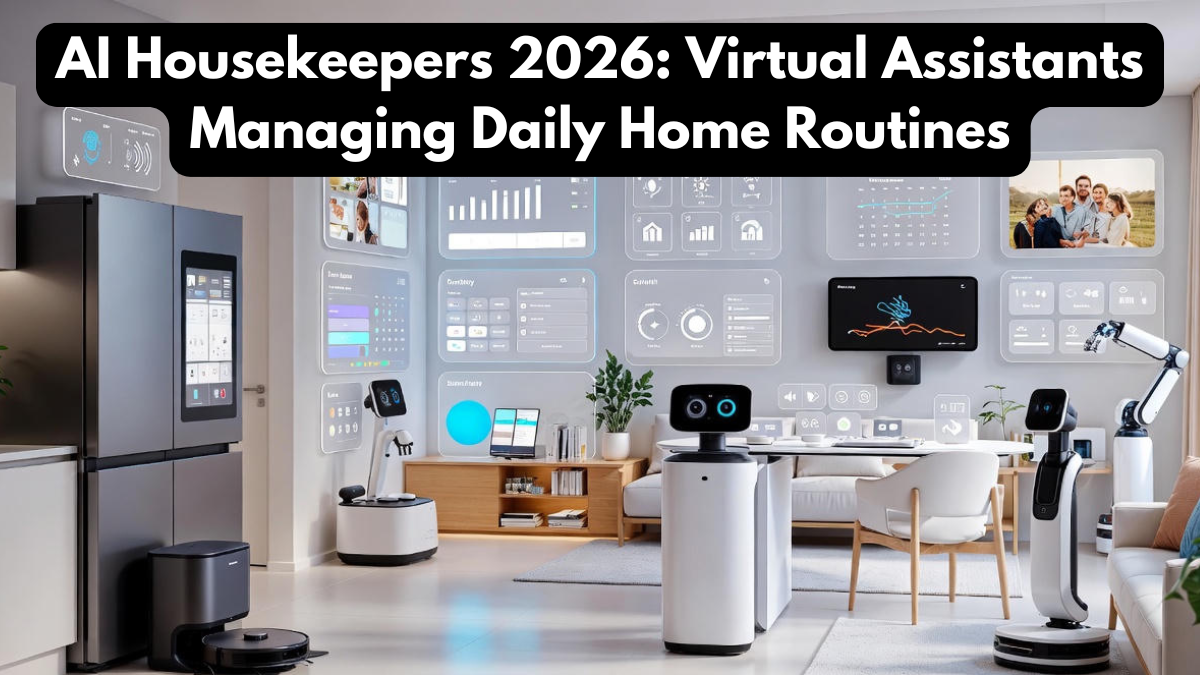
While smart homes have existed for several years, the introduction of AI Housekeepers takes automation to unprecedented heights. Traditional home assistants respond only when addressed, but systems powered by Smart home AI analyze routines, observe patterns, and adapt to user preferences—automatically. For example, an AI Housekeeper can detect when you typically wake up, adjust lights and temperature, prepare a coffee schedule, and even manage cleaning devices. By merging machine learning with home automation, these assistants are transforming the modern household into a responsive and personalized living environment.
How Smart Home AI Powers Modern AI Housekeepers
The strength of AI Housekeepers lies in the advanced Smart home AI algorithms that give them decision-making and predictive abilities. These models gather data from appliances, sensors, lights, security cameras, and user interactions. They learn household patterns such as meal times, cleaning needs, or sleep cycles. Using this information, AI Housekeepers can automate daily routines like dishwashing, laundry scheduling, and grocery reminders. With Smart home AI, these digital assistants make homes safer, cleaner, and more energy-efficient while reducing manual effort for the homeowner.
Key advantages of Smart home AI in these systems include:
- Predictive automation for routine tasks
- Enhanced home security with intelligent alerts
- Energy saving through optimized appliance use
- Personalized comfort settings
- Full integration with connected devices
Each of these advantages highlights why AI Housekeepers are becoming essential elements of next-generation home living.
Table: Core Functions of AI Housekeepers (2026)
| Function | Description | Benefit |
|---|---|---|
| Smart Home AI Integration | Connects and controls home devices | Centralized household management |
| Predictive Scheduling | Learns daily routines | Automates chores and reminders |
| Security Monitoring | Tracks entry points and unusual activity | Increased home safety |
| Energy Optimization | Manages power usage | Lower utility costs |
| Multi-device Connectivity | Works with appliances, sensors, and robots | Seamless home automation |
This table demonstrates how AI Housekeepers combined with Smart home AI create a fully efficient and intelligent home ecosystem.
Real-World Applications of AI Housekeepers
By 2026, the role of AI Housekeepers will expand across multiple household functions. Families can rely on them to plan weekly chores, coordinate robotic cleaners, and manage groceries by monitoring pantry inventory. In homes with elderly residents, Smart home AI can provide health alerts, medication reminders, and safety monitoring. Busy professionals benefit from automated routines that keep their homes organized without daily effort. These assistants can also coordinate entertainment systems, suggest recipes, adjust indoor climates, and help manage children’s schedules. The versatility of AI Housekeepers makes them invaluable for nearly every home scenario.
The Future of Intelligent Home Management
The ongoing development of Smart home AI suggests that the capabilities of AI Housekeepers will only grow. Future versions may include emotional recognition, allowing them to adjust lighting or music based on mood. They may coordinate with outdoor drones for security or inventory deliveries. As homes become even more interconnected, AI Housekeepers will function as central intelligence hubs, ensuring every device operates smoothly and efficiently. Over time, these systems will transition from simple assistants to true digital companions capable of managing nearly all household responsibilities.
Conclusion
The rise of AI Housekeepers marks a transformative moment in home automation. Driven by the advancements in Smart home AI, these virtual assistants bring intelligence, comfort, and automation to daily routines. They optimize chores, enhance safety, manage energy, and provide personalized living experiences. As we approach 2026, AI Housekeepers will redefine what it means to live in a modern home—making everyday life simpler, smarter, and more connected than ever before.
FAQs
What are AI Housekeepers?
AI Housekeepers are intelligent home management systems that automate chores, monitor home conditions, and assist with daily routines.
How does Smart home AI help these systems?
Smart home AI analyzes household patterns and controls connected devices to automate tasks efficiently.
Can AI Housekeepers improve home security?
Yes, they monitor doors, sensors, and cameras to provide real-time alerts and safety updates.
Are these systems suitable for elderly users?
Absolutely. They can offer medication reminders, safety checks, and assistance for everyday tasks.
Do AI Housekeepers save energy?
Yes, they optimize appliance usage and monitor power consumption to reduce energy waste.
Click here to learn more