Urban Cooling Corridors are becoming a critical response to the growing heat challenges faced by modern cities. Rapid urbanization, dense construction, and reduced green spaces have intensified the urban heat island effect, making cities significantly warmer than surrounding areas. As global climate patterns shift, heatwaves are becoming more frequent and severe, directly impacting public health, energy consumption, and livability. Urban Cooling Corridors are designed to counter these effects by integrating green infrastructure into strategic urban pathways. Through effective city planning, these corridors provide natural heat mitigation while enhancing environmental resilience and urban comfort.
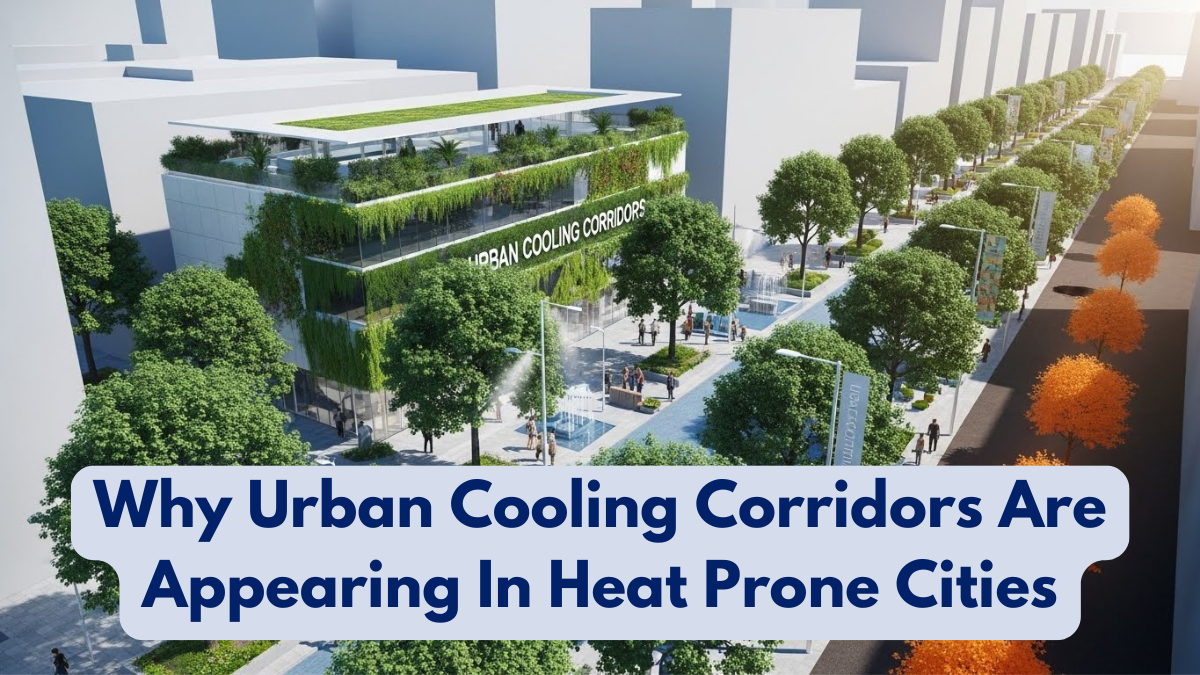
Why Urban Cooling Corridors Are Emerging In Heat Prone Cities
Heat-prone cities are increasingly turning to Urban Cooling Corridors as a sustainable solution to rising temperatures. Traditional cooling methods such as air conditioning place heavy demands on energy systems and contribute to further climate stress. In contrast, Urban Cooling Corridors leverage natural elements like trees, water bodies, and shaded walkways to reduce ambient temperatures. These corridors are strategically planned through advanced city planning frameworks to channel cooler air across urban zones. By prioritizing heat mitigation at the neighborhood level, cities can protect vulnerable populations while improving overall quality of life.
How Urban Cooling Corridors Support Climate Resilient City Planning
Effective city planning plays a central role in the success of Urban Cooling Corridors. Urban planners identify heat hotspots and design connected green networks that allow air circulation and temperature regulation. These corridors often link parks, rivers, and green streets, creating continuous cooling pathways across the city. As part of long-term climate adaptation strategies, Urban Cooling Corridors help cities reduce heat-related health risks and infrastructure strain. Their integration into urban design reflects a shift toward nature-based solutions that prioritize heat mitigation alongside economic and social development.
Key Components Of Urban Cooling Corridors
The effectiveness of Urban Cooling Corridors depends on several interconnected elements. The table below highlights the main components and their cooling impact:
| Component | Function | Cooling Benefit |
|---|---|---|
| Urban Trees | Shade and evapotranspiration | Natural heat mitigation |
| Green Roofs | Surface temperature reduction | Improved climate resilience |
| Water Features | Evaporative cooling | Lower ambient heat |
| Shaded Walkways | Pedestrian comfort | Enhanced urban usability |
| Open Air Pathways | Air circulation | Supports city planning goals |
By combining these elements, Urban Cooling Corridors create measurable temperature reductions while enhancing urban ecosystems.
Benefits Of Urban Cooling Corridors For Cities And Communities
The benefits of Urban Cooling Corridors extend beyond temperature control. They improve air quality, encourage outdoor activity, and support biodiversity within dense urban environments. From a social perspective, these corridors create cooler, safer public spaces that promote community interaction. Economically, cities benefit from reduced healthcare costs related to heat stress and lower energy demand. By integrating Urban Cooling Corridors into city planning, municipalities address climate risks proactively while delivering long-term heat mitigation solutions that benefit residents and ecosystems alike.
Conclusion: Why Urban Cooling Corridors Are Essential For Future Cities
As cities confront escalating climate challenges, Urban Cooling Corridors are emerging as an essential urban adaptation strategy. Their ability to deliver natural heat mitigation, improve livability, and support sustainable city planning makes them indispensable in heat-prone regions. Rather than relying solely on mechanical cooling, cities are embracing Urban Cooling Corridors to build resilience, protect public health, and create more comfortable urban environments. As global temperatures continue to rise, these corridors will play a vital role in shaping cooler, healthier, and more sustainable cities.
FAQs
What Are Urban Cooling Corridors?
Urban Cooling Corridors are planned green pathways that reduce city temperatures through natural heat mitigation techniques.
How Do Urban Cooling Corridors Help With Climate Change?
They support climate adaptation by lowering urban heat and reducing energy demand for artificial cooling.
Are Urban Cooling Corridors Part Of City Planning?
Yes, Urban Cooling Corridors are increasingly integrated into modern city planning strategies.
Do Urban Cooling Corridors Improve Public Health?
By reducing extreme heat exposure, Urban Cooling Corridors help lower heat-related health risks.
Can Urban Cooling Corridors Be Built In Existing Cities?
Yes, with thoughtful city planning, Urban Cooling Corridors can be retrofitted into existing urban areas to enhance heat mitigation.
Click here to learn more