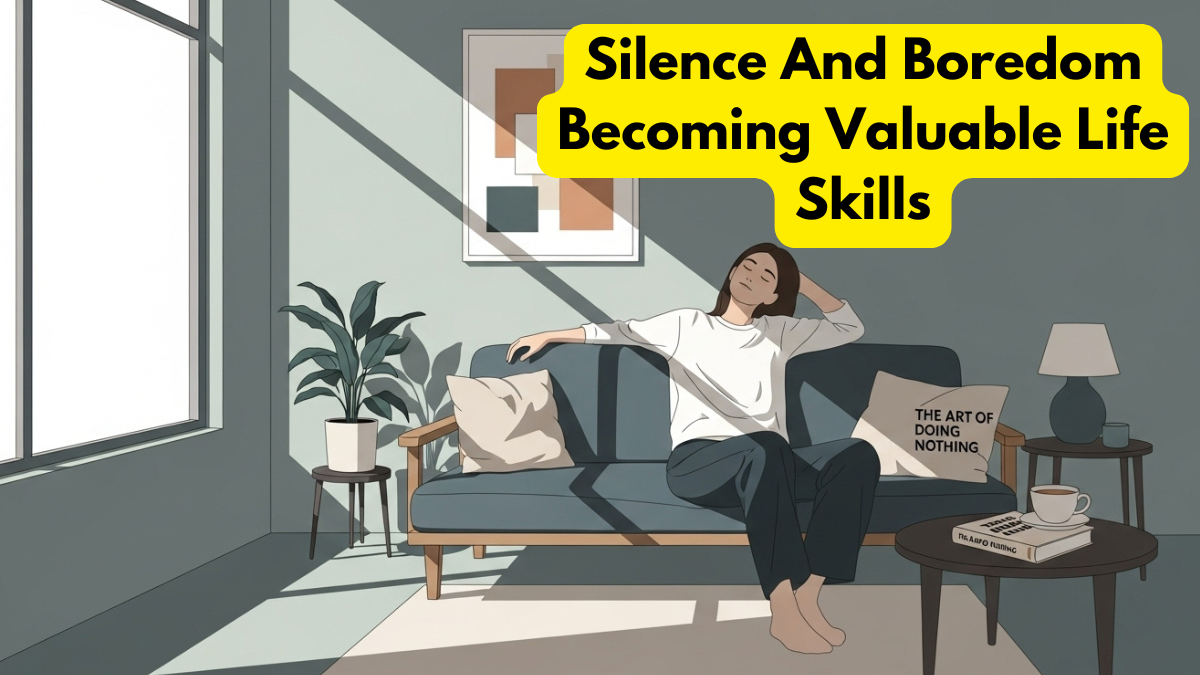
Modern life is engineered to eliminate silence. Notifications, streaming content, background noise, and constant stimulation fill every empty moment. Waiting, resting, or sitting without input is increasingly rare. Yet, a quiet reversal is underway. Boredom value is being rediscovered as people recognize that constant stimulation weakens focus, creativity, and resilience. As mindfulness trends gain traction, silence and boredom are no longer seen as problems to solve but as essential practices that build mental strength in an overstimulated world.
Why Silence And Boredom Were Pushed Out Of Daily Life
For decades, productivity culture framed idle time as waste. Technology promised efficiency by filling gaps with content and tasks. Over time, this mindset trained people to avoid boredom at all costs. Silence became uncomfortable, and stillness felt unproductive.
This avoidance came with hidden costs. Without downtime, the brain never fully recovers. Creativity declines, stress accumulates, and attention fragments. The rediscovery of boredom value reflects a growing awareness that mental recovery requires emptiness. As mindfulness trends challenge hustle culture, silence is being reclassified as a skill rather than a void.
Understanding Boredom Value In Mental Development
Boredom value refers to the cognitive and emotional benefits that arise when the mind is not externally stimulated. In these moments, the brain processes experiences, forms insights, and strengthens internal focus. Rather than being passive, boredom activates deep mental functions.
This process directly supports mental strength. People who tolerate boredom develop patience, emotional regulation, and resilience. They are less dependent on constant entertainment and more capable of sustained focus. As mindfulness trends emphasize awareness and presence, boredom is increasingly viewed as a training ground for mental endurance.
Mindfulness Trends And The Return Of Silence
Modern mindfulness trends highlight intentional pauses, quiet observation, and non-reactive awareness. Practices such as meditation, breathwork, and silent reflection all rely on the ability to sit without stimulation. These practices normalize silence and restore its value.
Silence allows thoughts to surface without interruption. This awareness strengthens emotional intelligence and self-regulation. As people engage with mindfulness trends, they begin to recognize the boredom value hidden within stillness. Silence becomes a tool for clarity rather than something to escape.
How Silence Builds Mental Strength
Mental strength is not only about endurance under pressure but also about comfort with stillness. The ability to remain calm without distraction builds confidence and self-trust. Silence removes external anchors, forcing individuals to rely on internal stability.
Key ways silence supports mental strength include:
- Improved emotional regulation
- Greater tolerance for discomfort
- Enhanced focus and attention span
- Reduced impulsive behavior
- Stronger self-awareness
These outcomes reveal why boredom value is increasingly recognized in psychological and wellness discussions. Silence is no longer passive; it is active mental conditioning aligned with evolving mindfulness trends.
Comparing Stimulated Living And Boredom-Tolerant Living
A comparison clarifies why silence is gaining importance.
| Aspect | Constant Stimulation | Boredom-Tolerant Living |
|---|---|---|
| Attention | Fragmented | Sustained |
| Emotional state | Reactive | Stable |
| Mental strength | Weakened | Strengthened |
| Creativity | Shallow | Deep |
| Boredom value | Ignored | Cultivated |
This contrast explains why many people feel exhausted despite endless entertainment. Reintroducing boredom restores balance and strengthens mental strength through intentional restraint.
The Role Of Boredom In Creativity And Insight
Many creative breakthroughs occur during moments of boredom. When the mind is not occupied, it begins to connect ideas freely. This spontaneous thinking fuels imagination and problem-solving.
Constant stimulation suppresses this process. By reclaiming boredom value, individuals allow creativity to emerge naturally. This aligns with mindfulness trends that emphasize openness and curiosity. Silence creates the mental space required for insight, reinforcing long-term mental strength.
Social Discomfort With Silence And Boredom
Despite its benefits, boredom is often socially stigmatized. Silence in conversation can feel awkward, and unoccupied moments are quickly filled with devices. This discomfort reflects cultural conditioning rather than necessity.
As conversations around burnout and attention fatigue grow, social attitudes are shifting. Accepting silence becomes a sign of confidence rather than emptiness. This shift elevates boredom value and supports a culture that respects inner space as part of mental strength development.
Technology And The Fear Of Boredom
Technology excels at eliminating boredom instantly. While convenient, this constant escape reduces tolerance for stillness. Over time, people lose the ability to sit quietly without anxiety.
Rebuilding this tolerance requires intentional disengagement. Short periods of silence retrain the nervous system. As mindfulness trends encourage conscious use of technology, people rediscover the benefits of boredom and reclaim lost mental strength.
Teaching Boredom As A Life Skill
Children and adults alike benefit from learning how to be bored. Structured schedules and constant entertainment reduce opportunities to develop this skill. Teaching boredom tolerance supports emotional resilience and creativity.
Educational and parenting approaches increasingly recognize boredom value as essential. Allowing unstructured time builds independence and internal motivation. This perspective aligns with mindfulness trends that emphasize presence and awareness from an early age.
Silence As Resistance To Overstimulation
Choosing silence in a noisy world is a form of resistance. It rejects the assumption that attention must always be occupied. Silence restores agency over focus and time.
This intentional withdrawal strengthens mental strength by reducing dependency on external input. As people experience the benefits, boredom value becomes self-evident rather than theoretical. Silence transforms from absence into nourishment.
The Long-Term Benefits Of Embracing Boredom Value
Over time, individuals who embrace boredom report greater calm, improved concentration, and deeper satisfaction. Life feels less rushed and more intentional. These outcomes reflect strengthened mental strength built through consistent stillness.
As mindfulness trends continue to influence wellness culture, boredom is rebranded as a necessary counterbalance to stimulation. Silence supports recovery, insight, and resilience in ways constant activity cannot.
The Future Of Mindfulness Trends And Mental Strength
As attention becomes increasingly commodified, the ability to disengage will grow in value. Future mindfulness trends will likely emphasize silence, simplicity, and boredom tolerance as core skills.
In this future, boredom value is not an abstract concept but a practical advantage. Those who cultivate it will navigate complexity with greater calm and clarity. Mental strength becomes less about pushing harder and more about knowing when to stop.
Conclusion
The rediscovery of boredom value marks a significant shift in how silence is perceived. No longer an enemy of productivity, boredom is emerging as a powerful tool for focus, creativity, and resilience. As mindfulness trends normalize stillness, silence becomes a skill that strengthens the mind. In a world saturated with noise, the ability to sit quietly is no longer passive, it is a form of strength that supports a healthier, more intentional life.
FAQs
What does boredom value mean?
Boredom value refers to the mental and emotional benefits gained from periods of silence and low stimulation.
Why is boredom important for mental strength?
Boredom builds tolerance for discomfort, improves focus, and strengthens emotional regulation.
How do mindfulness trends relate to boredom?
Mindfulness trends encourage stillness and awareness, helping people rediscover the value of silence.
Is silence uncomfortable at first?
Yes, silence can feel uncomfortable initially, but comfort increases with practice.
Can boredom improve creativity?
Yes, boredom allows the mind to wander freely, which often leads to deeper creativity and insight.
Click here to learn more