Food traceability is rapidly becoming a central issue in modern food systems as consumers demand greater clarity about what they eat and where it comes from. High-profile contamination cases, recalls, and misleading claims have weakened trust in food brands and regulators alike. In this environment, food traceability offers a way to restore confidence by allowing products to be tracked from origin to plate with verifiable data. Consumers increasingly expect visibility, not assurances.
As global food systems grow more complex, the distance between production and consumption has widened. Ingredients may pass through multiple countries, processors, and distributors before reaching shelves. Without robust food traceability, gaps emerge that undermine food safety and accountability. Transparent systems that document each step are now seen as essential rather than optional, especially in a trust-sensitive market.
Supply chain transparency and trust rebuilding
A key reason food traceability matters is its role in enabling supply chain transparency. Transparency allows stakeholders to see how food is sourced, processed, and transported, reducing uncertainty and suspicion. When consumers can verify claims such as organic, fair trade, or local sourcing, trust shifts from marketing language to evidence-based confidence.
Greater supply chain transparency also strengthens relationships between producers, retailers, and consumers. Brands that openly share sourcing data demonstrate accountability and commitment to ethical practices. This openness differentiates trustworthy companies in competitive markets. As expectations rise, food traceability becomes a core mechanism for proving transparency rather than merely stating it.
Food safety and rapid risk response
Protecting food safety is one of the most practical benefits of food traceability. When contamination or quality issues arise, traceable systems allow affected products to be identified and removed quickly. This speed minimizes health risks and reduces the scope of recalls, protecting both consumers and businesses.
Without effective food traceability, investigations into foodborne illness can take weeks, increasing exposure and eroding trust. Traceable records support accountability at each stage of production, encouraging higher safety standards. As consumers become more aware of these risks, expectations around food safety are directly shaping purchasing decisions.
Labeling accuracy and informed consumer choice
Accurate labeling is another area where food traceability is reshaping consumer confidence. Shoppers increasingly rely on labels to make choices aligned with health, ethics, and sustainability values. Traceability systems provide the data needed to ensure that labels accurately reflect origin, ingredients, and processing methods.
Misleading or vague labeling undermines trust and can trigger backlash when exposed. By linking labels to verified traceability data, brands reduce the risk of false claims and regulatory penalties. For consumers, reliable labeling supported by food traceability transforms packaging from marketing into a source of credible information.
Key drivers behind the rise of food traceability include:
- Demand for supply chain transparency
- Heightened concern for food safety
- Increased scrutiny of labeling claims
- Globalized and complex food systems
- Consumer trust and brand differentiation
The table below compares low-traceability and high-traceability food systems:
| Aspect | Low Traceability | High Food Traceability |
|---|---|---|
| Supply chain transparency | Limited | End-to-end visibility |
| Food safety response | Slow | Rapid and targeted |
| Labeling accuracy | Risk of error | Data-verified |
| Consumer confidence | Fragile | Strengthened |
| Recall impact | Broad | Minimized |
Technology enabling modern food traceability
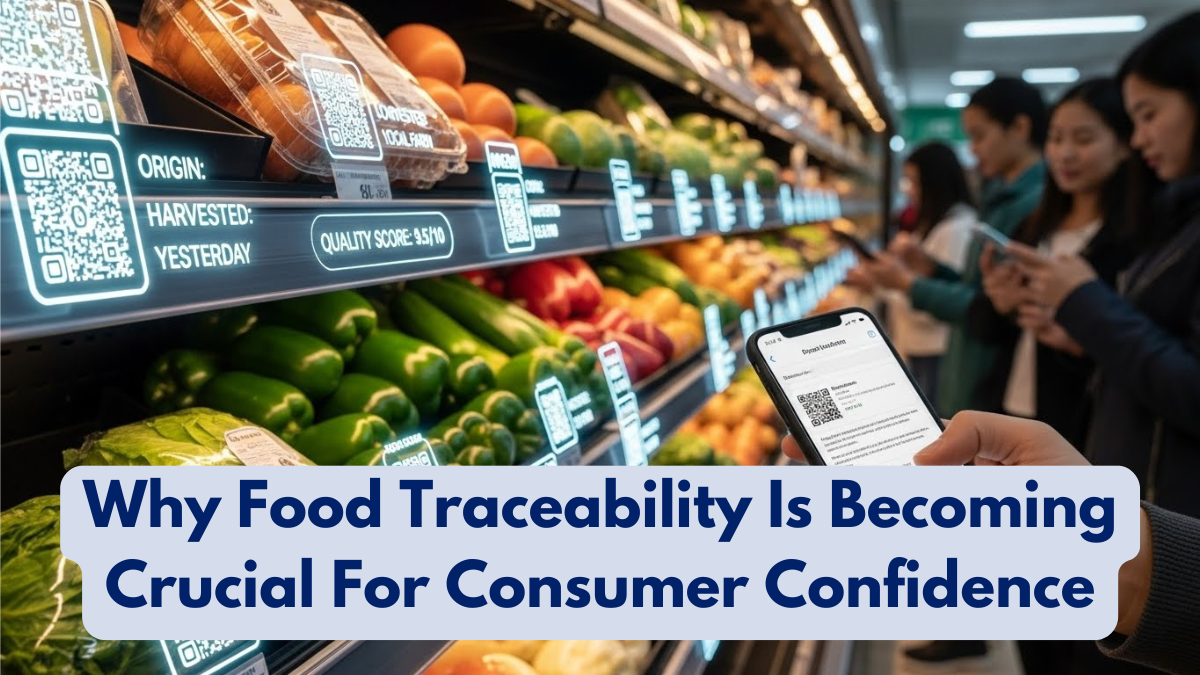
Advances in digital technology are accelerating adoption of food traceability across the industry. Blockchain, QR codes, IoT sensors, and centralized databases make it easier to capture and share data across the supply chain. These tools support real-time updates and tamper-resistant records, enhancing supply chain transparency.
For consumers, scanning a code to view sourcing details is becoming increasingly common. This direct access to information strengthens confidence in labeling and food safety claims. As technology becomes more affordable and standardized, food traceability is moving from premium products into mainstream markets.
Regulatory pressure and market expectations
Regulators are also playing a role in expanding food traceability requirements. Governments are introducing stricter reporting rules to improve food safety and manage recalls more effectively. Compliance with these regulations is becoming a baseline expectation rather than a competitive advantage.
At the same time, market pressure from retailers and consumers is pushing suppliers to adopt traceability systems proactively. Brands that fail to meet expectations around supply chain transparency and labeling risk losing shelf space and customer loyalty. Food traceability is thus becoming embedded in both regulatory and commercial strategy.
Conclusion
In conclusion, food traceability is becoming crucial for consumer confidence because it directly addresses concerns around supply chain transparency, food safety, and accurate labeling. In a globalized food system where trust is easily lost, traceability provides verifiable proof rather than promises. As technology, regulation, and consumer expectations converge, food traceability will continue to define which brands are trusted and which are questioned.
FAQs
What is food traceability?
Food traceability is the ability to track food products through every stage of production and distribution.
How does food traceability improve food safety?
It enables faster identification and removal of contaminated products, protecting food safety.
Why is supply chain transparency important to consumers?
Supply chain transparency helps consumers verify sourcing claims and trust food brands.
How does labeling benefit from food traceability?
Traceability ensures labeling claims are accurate and supported by verified data.
Is food traceability becoming mandatory?
In many regions, regulations are expanding, making food traceability increasingly required.
Click here to learn more