As wildfires become increasingly frequent and intense worldwide, architects and engineers are seeking innovative materials that can safeguard communities while maintaining aesthetic and structural integrity. Among the emerging solutions, fire-resistant glass hybrids stand out as a breakthrough capable of reshaping the future of wildfire architecture. These advanced glazing systems offer unprecedented protection against extreme heat, flying embers, and sudden temperature fluctuations. By merging transparency with resilience, fire-resistant glass allows buildings to remain functional, beautiful, and safe in regions threatened by wildfire activity.
Understanding the Need for Fire-Resilient Building Materials
Wildfire-prone areas face unique challenges that require specialized building materials capable of withstanding intense environmental stress. Traditional glass, while visually appealing, is highly vulnerable to cracking, shattering, or melting during fire exposure. This vulnerability poses a severe risk for buildings in wildfire zones. The introduction of fire-resistant glass provides a safer alternative by incorporating multi-layer composites, heat-absorbing gels, and reinforced glazing structures. These innovations directly support modern wildfire architecture, enabling designs that balance natural light, visibility, and fire protection without compromising the safety of occupants.
How Fire-Resistant Glass Hybrids Work
Advanced fire-resistant glass systems undergo rigorous engineering to resist extreme thermal conditions. Many hybrids consist of multiple glass layers bonded with intumescent or gel cores that expand when heated. This expansion creates an insulating barrier that prevents fire from penetrating interior spaces. In wildfire architecture, this type of glazing is especially valuable for windows, facades, skylights, and fire-rated compartmentalization zones. The glass not only blocks heat radiation but also prevents flames from traveling across building sections, significantly reducing structural damage and improving evacuation safety.
Architectural Freedom Through Protective Innovation
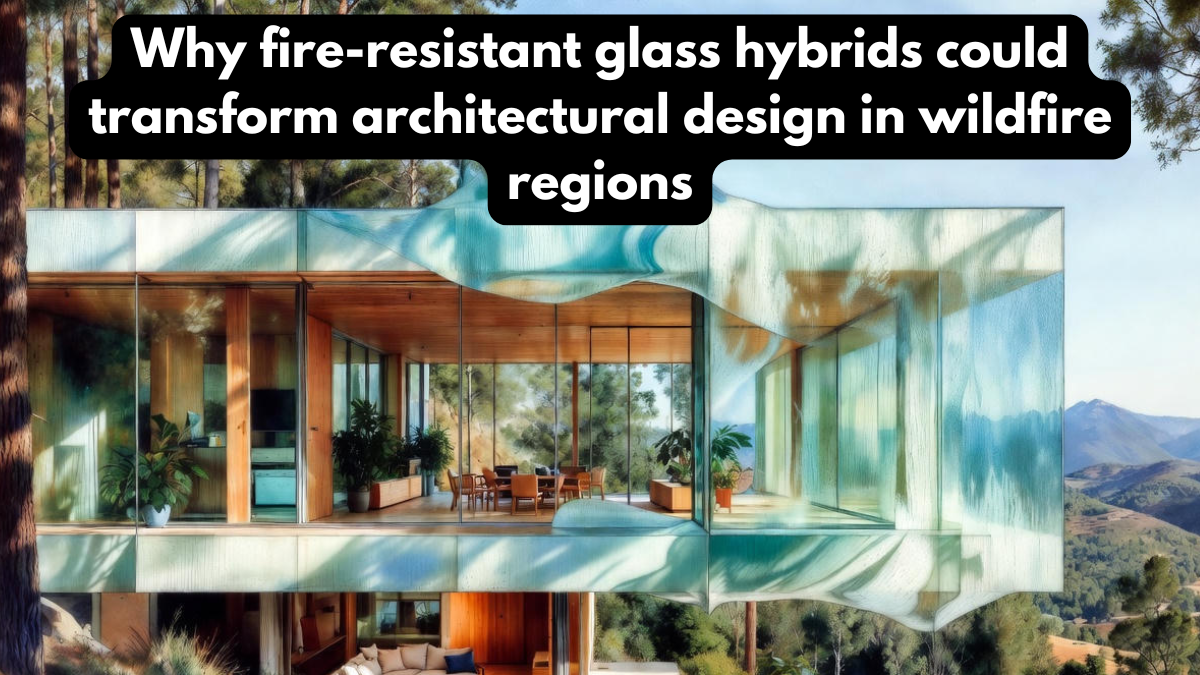
Historically, fire-prone regions had to compromise between structural safety and architectural creativity. Designers often reduced window sizes or avoided transparent materials to minimize fire risk. However, with the introduction of durable fire-resistant glass, architects now enjoy greater freedom to incorporate large windows, open facades, and natural lighting into wildfire architecture. This shift promotes healthier indoor environments, enhances visibility during emergencies, and preserves the beauty of modern design. Fire-resistant glazing also opens opportunities for eco-friendly structures that blend harmoniously into natural landscapes without sacrificing resilience.
Comparison Table: Traditional Glass vs. Fire-Resistant Glass in Wildfire Architecture
The following table illustrates how fire-resistant glass greatly surpasses traditional glazing options in the context of wildfire architecture:
| Feature | Traditional Glass | Fire-Resistant Glass Hybrids |
|---|---|---|
| Heat Tolerance | Low | Very high, multi-layer protection |
| Breakage Risk in Fire | Extremely high | Minimal to none |
| Structural Durability | Weak under thermal stress | Strong, insulated, and impact-resistant |
| Architectural Flexibility | Limited in fire zones | High, enabling modern design |
| Suitability for Wildfire Regions | Poor | Excellent |
This comparison highlights why fire-resistant glass is becoming a cornerstone of resilient design strategies across high-risk fire zones.
The Future of Wildfire-Resilient Building Design
As engineering continues to evolve, fire-resistant glass technologies are expected to become even more sophisticated, integrating smart coatings, self-darkening layers, and thermal-sensing capabilities. These advancements will strengthen the role of fire-resistant glazing in wildfire architecture, creating safer residential, commercial, and public structures. Future buildings may include interactive window systems that seal automatically during fire events or facades designed to deflect heat waves. With wildfire threats increasing globally, fire-resistant glass represents a crucial step toward sustainable, disaster-resilient architecture.
Conclusion
The development of fire-resistant glass hybrids marks a transformative moment in the advancement of wildfire architecture. By enhancing structural safety while preserving design flexibility, these materials bridge the gap between practicality and aesthetic expression. As more regions adopt fire-smart building codes and seek long-term protective solutions, fire-resistant glass will continue shaping resilient architectural landscapes, ensuring that communities remain safe, functional, and visually inspiring during wildfire events.
FAQs
How does fire-resistant glass help protect buildings in wildfire regions?
It provides thermal insulation, prevents glass breakage, and stops flames or heat radiation from penetrating interior spaces.
Is fire-resistant glass suitable for modern home designs?
Yes, it supports large windows and transparent facades, expanding creative possibilities in wildfire architecture.
What makes fire-resistant glass different from standard glass?
Unlike traditional options, fire-resistant glass contains multi-layer structures that withstand extreme temperatures without shattering.
Can fire-resistant glass reduce wildfire damage?
Absolutely. It strengthens building envelopes and helps prevent ignition, making it a key component of wildfire architecture strategies.
Click here to learn more