Deep beneath the Earth’s surface exist intricate cave wind networks that move air through tunnels, chambers, and limestone passages in remarkably efficient ways. These natural airflow systems operate without mechanical assistance, relying solely on temperature differences, pressure variations, and geological formations. Today, engineers and environmental scientists are studying these natural phenomena to better understand how to design advanced natural ventilation systems for modern buildings, eco-structures, and underground facilities. As society seeks sustainable climate-control solutions, caves offer a compelling blueprint for airflow efficiency.
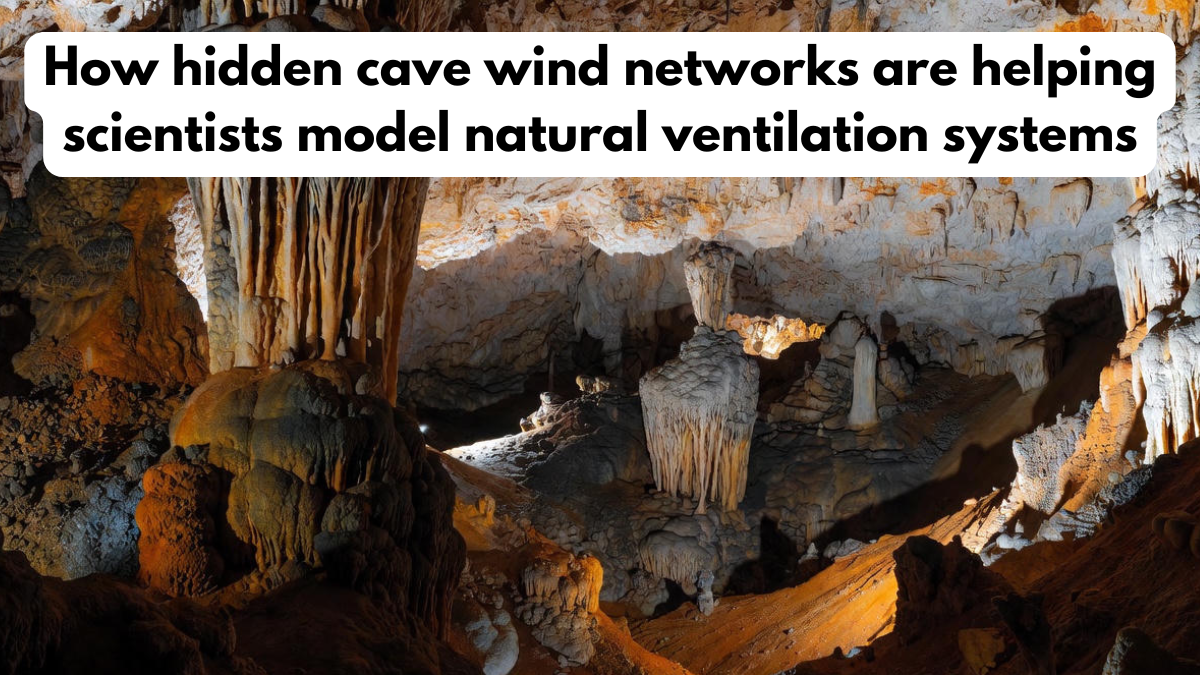
Discovering the Science Behind Cave Airflow
The movement of air inside cave wind networks is driven by subtle but powerful environmental factors. In many cave systems, warm air rises toward higher openings while cooler air sinks into lower passages. This creates a continuous airflow cycle that mimics engineered natural ventilation systems. Scientists studying microclimate regulation in caves have found that air distribution remains stable, persistent, and energy-free. By understanding these natural airflow patterns, researchers can incorporate aerodynamic principles into green building designs that reduce the need for air conditioning and mechanical ventilation.
Translating Cave Dynamics Into Architecture
The architectural world has begun adopting airflow strategies inspired by cave wind networks to create more sustainable environments. Engineers analyze cave geometry, passage angles, and chamber shapes to determine how air accelerates, decelerates, or circulates naturally. This data helps refine natural ventilation techniques that guide fresh air through buildings without relying heavily on electric fans or HVAC systems. By designing structures with strategic openings, temperature-driven air pathways, and pressure zones, architects can significantly reduce energy consumption while enhancing indoor air quality. Caves demonstrate that when airflow is correctly channeled, even complex structures can maintain stable climate conditions.
Ecological and Economic Advantages
One of the most appealing aspects of mimicking cave wind networks is the possibility of reducing environmental impact. Natural ventilation systems inspired by cave airflow minimize reliance on fossil-fuel-powered cooling technologies, cutting down carbon emissions. Additionally, buildings that utilize passive ventilation require less maintenance and incur lower operational costs. This is particularly beneficial in schools, museums, public gathering spaces, and large commercial environments where air circulation demands are high. By studying caves, engineers gain a deeper understanding of sustainable airflow solutions that benefit both ecological health and economic feasibility.
Table: Comparing Cave-Inspired Ventilation With Traditional Systems
The table below highlights how inspiration from cave wind networks compares with conventional natural ventilation and mechanical systems.
| Ventilation Method | Energy Consumption | Airflow Efficiency | Maintenance Needs | Environmental Impact |
|---|---|---|---|---|
| Mechanical HVAC | High | High but artificial | High | Moderate to high |
| Standard Natural Ventilation | Low | Variable | Low | Low |
| Cave-Inspired Natural Ventilation | Very low | Extremely efficient | Minimal | Very low |
This comparison demonstrates why integrating insights from cave wind networks offers a promising future for advanced natural ventilation designs.
Future Applications and Research Directions
As climate concerns grow, scientists continue exploring uncharted cave systems to better understand these ancient yet efficient airflow mechanisms. Future architectural innovations may include urban structures with built-in thermal shafts, underground transport hubs modeled after cave chambers, and energy-neutral eco-homes designed with cave-inspired airflow routes. By unlocking the secrets of cave wind networks, engineers can push the boundaries of passive cooling and ventilation. These discoveries may help cities drastically reduce energy consumption while improving indoor environmental comfort and resilience.
Conclusion
The study of cave wind networks is proving instrumental in shaping next-generation natural ventilation systems. These natural airflows demonstrate how temperature and pressure gradients can maintain continuous, energy-free ventilation. By applying lessons from cave environments, architects and engineers are creating more sustainable, efficient, and climate-resilient structures. As research continues, the humble cave may become a guiding force in global efforts to reduce energy use and improve environmental performance in modern architecture.
FAQs
How do cave wind networks work?
They rely on differences in air temperature and pressure to move air naturally through underground passages.
Why are caves useful for understanding natural ventilation?
Their stable and efficient airflow patterns help engineers develop advanced natural ventilation strategies for buildings.
Can cave-inspired ventilation reduce energy costs?
Yes, designs modeled after cave wind networks minimize reliance on mechanical cooling systems, lowering energy consumption.
Are modern buildings already using these principles?
Many eco-focused structures incorporate airflow patterns inspired by cave wind networks to enhance natural ventilation performance.
Click here to learn more