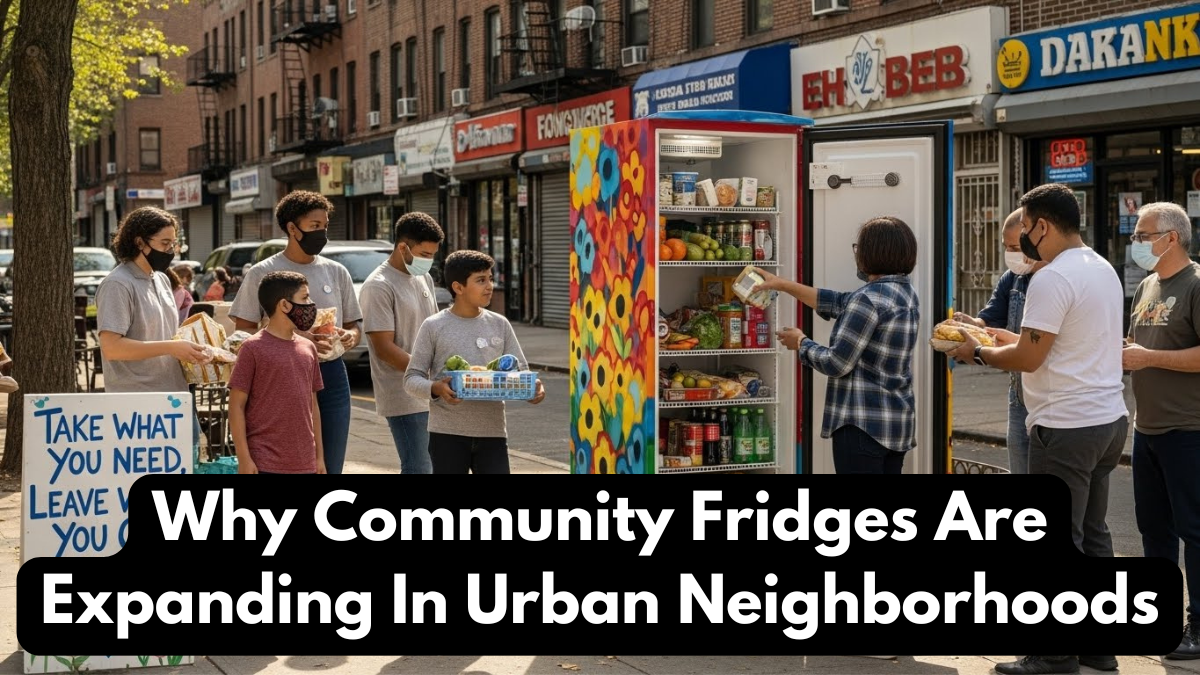
Community fridges are becoming a visible and impactful feature across many urban neighborhoods as cities grapple with food insecurity, rising living costs, and social isolation. Placed in accessible public spaces, these refrigerators allow people to leave surplus food and take what they need without questions or paperwork. The rapid spread of community fridges reflects a grassroots response to gaps in traditional food assistance systems and a growing desire for dignified, community-led solutions.
In dense urban environments, economic inequality often exists block by block. Community fridges respond to this reality by operating at a hyperlocal level, where neighbors directly support one another. Unlike centralized food banks, these initiatives foster trust and immediacy. By normalizing food sharing in public spaces, community fridges reduce stigma while strengthening everyday connections among residents.
Food sharing as a practical response to urban food insecurity
One of the primary reasons community fridges are expanding is their role in facilitating food sharing in a simple and inclusive way. Households, restaurants, bakeries, and grocery stores often have surplus food that would otherwise go to waste. Community fridges create a reliable outlet for this excess, redirecting it to people who need it most. This decentralized food sharing model operates continuously, without strict schedules or eligibility checks.
Urban food insecurity is often unpredictable, affecting gig workers, students, migrants, and low-income families differently from month to month. Community fridges adapt well to these fluctuating needs because they are flexible and community-managed. Through open-access food sharing, these fridges provide immediate relief while reducing food waste, making them both socially and environmentally beneficial.
Mutual aid and grassroots community resilience
At their core, community fridges are expressions of mutual aid, where support is reciprocal rather than transactional. Unlike charitable models that separate donors and recipients, mutual aid emphasizes solidarity and shared responsibility. Anyone can contribute to or benefit from a community fridge, reinforcing the idea that needs can shift over time. This philosophy has helped community fridges gain trust and participation in diverse urban settings.
The rise of mutual aid networks during times of crisis has further accelerated the adoption of community fridges. When formal systems are slow or overwhelmed, residents often organize quickly to meet immediate needs. Community fridges become hubs of mutual aid, offering not just food but a sense of collective care. This strengthens social cohesion and empowers communities to support themselves.
Local support networks and neighborhood ownership
Another factor driving the growth of community fridges is their strong foundation in local support. These initiatives are typically maintained by neighborhood volunteers who clean, stock, and monitor the fridges. This local ownership fosters accountability and ensures that the fridge reflects the cultural and dietary needs of the community it serves. As a result, community fridges often feel more welcoming and relevant than one-size-fits-all programs.
Through local support, community fridges also encourage partnerships with nearby businesses, schools, and housing associations. These collaborations help sustain consistent food supply and maintenance. When residents see community fridges as shared assets, participation increases, reinforcing cycles of food sharing and collective responsibility.
Key reasons behind the expansion of community fridges include:
- Accessible food sharing without stigma
- Strong mutual aid principles
- Community-led local support and management
- Reduction of food waste in urban areas
- Rapid response to changing neighborhood needs
The table below compares community fridges with traditional food assistance models:
| Aspect | Traditional Food Aid | Community fridges |
|---|---|---|
| Access | Scheduled and conditional | Open and continuous |
| Stigma | Often present | Minimal |
| Community role | Donor-recipient | Mutual aid based |
| Food sharing | Limited | Central function |
| Local support | Centralized | Neighborhood-led |
Challenges, sustainability, and safety considerations
Despite their benefits, community fridges face challenges related to sustainability, hygiene, and regulatory compliance. Maintaining consistent local support requires ongoing volunteer engagement and clear guidelines. Food safety concerns must be addressed through proper labeling, regular cleaning, and education around acceptable donations. Without these safeguards, trust in community fridges can erode.
To address these issues, many organizers establish simple rules and collaborate with local health authorities. Digital platforms and social media also help coordinate food sharing and volunteer schedules. As community fridges mature, stronger organizational structures can preserve their grassroots spirit while ensuring long-term viability and effective mutual aid.
Conclusion
In conclusion, community fridges are expanding in urban neighborhoods because they offer a flexible, dignified, and community-driven response to food insecurity. By promoting food sharing, strengthening mutual aid, and relying on local support, these initiatives address both material needs and social connection. As cities continue to face economic and social pressures, community fridges demonstrate how small-scale, collective action can create meaningful and resilient urban support systems.
FAQs
What are community fridges?
Community fridges are publicly accessible refrigerators where people can donate or take food freely.
How do community fridges support food sharing?
They provide a constant, stigma-free space for food sharing within neighborhoods.
What role does mutual aid play in community fridges?
Mutual aid ensures community fridges operate on shared responsibility rather than charity.
Who maintains community fridges?
They are typically managed through local support from volunteers, residents, and nearby businesses.
Are community fridges sustainable long term?
With strong local support, clear guidelines, and active participation, community fridges can be sustainable and impactful.
Click here to learn more